

AstraZeneca Unveils Insights on the ‘1+’ Mechanism at DRAP Industry Sharing Session
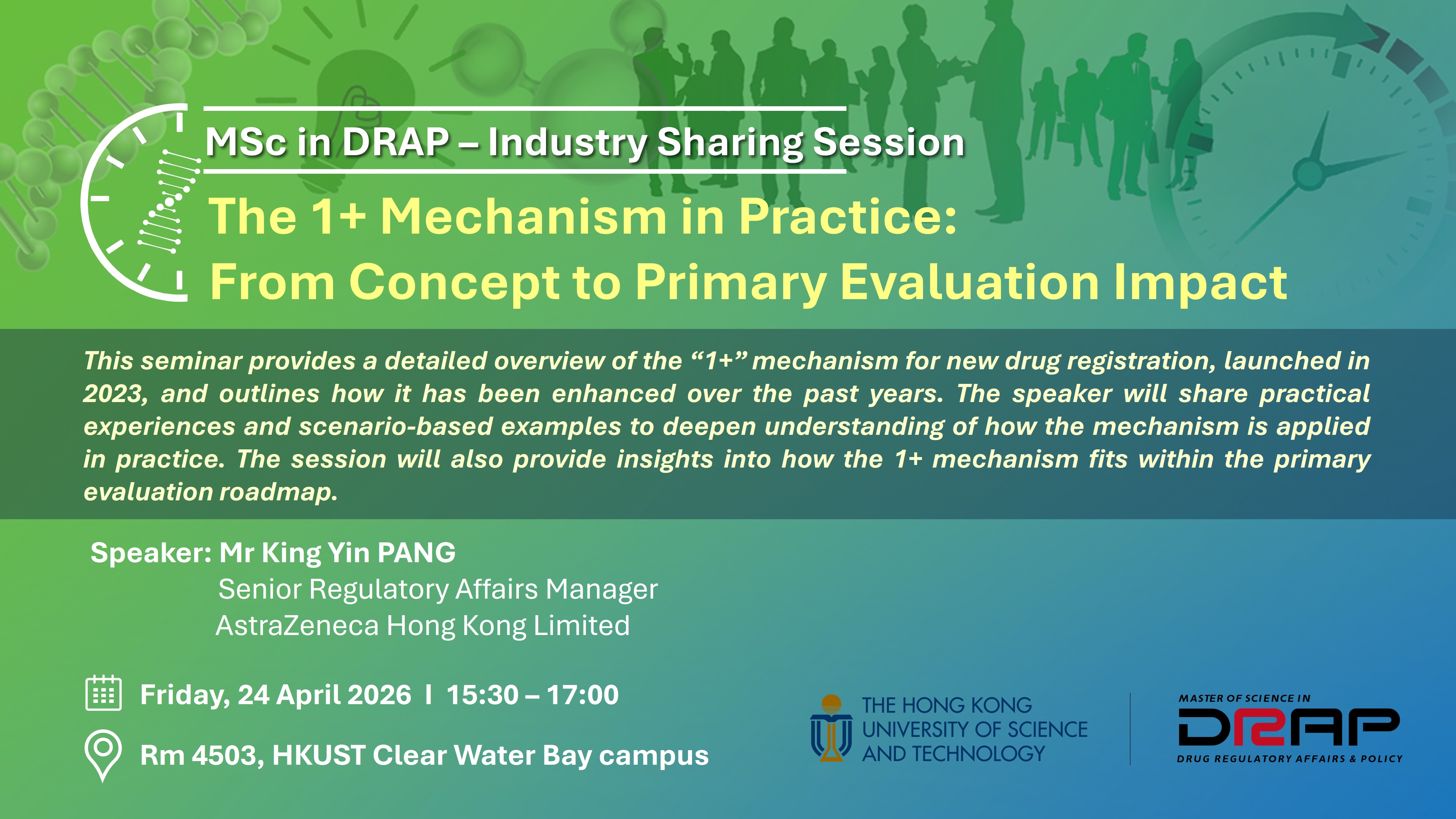
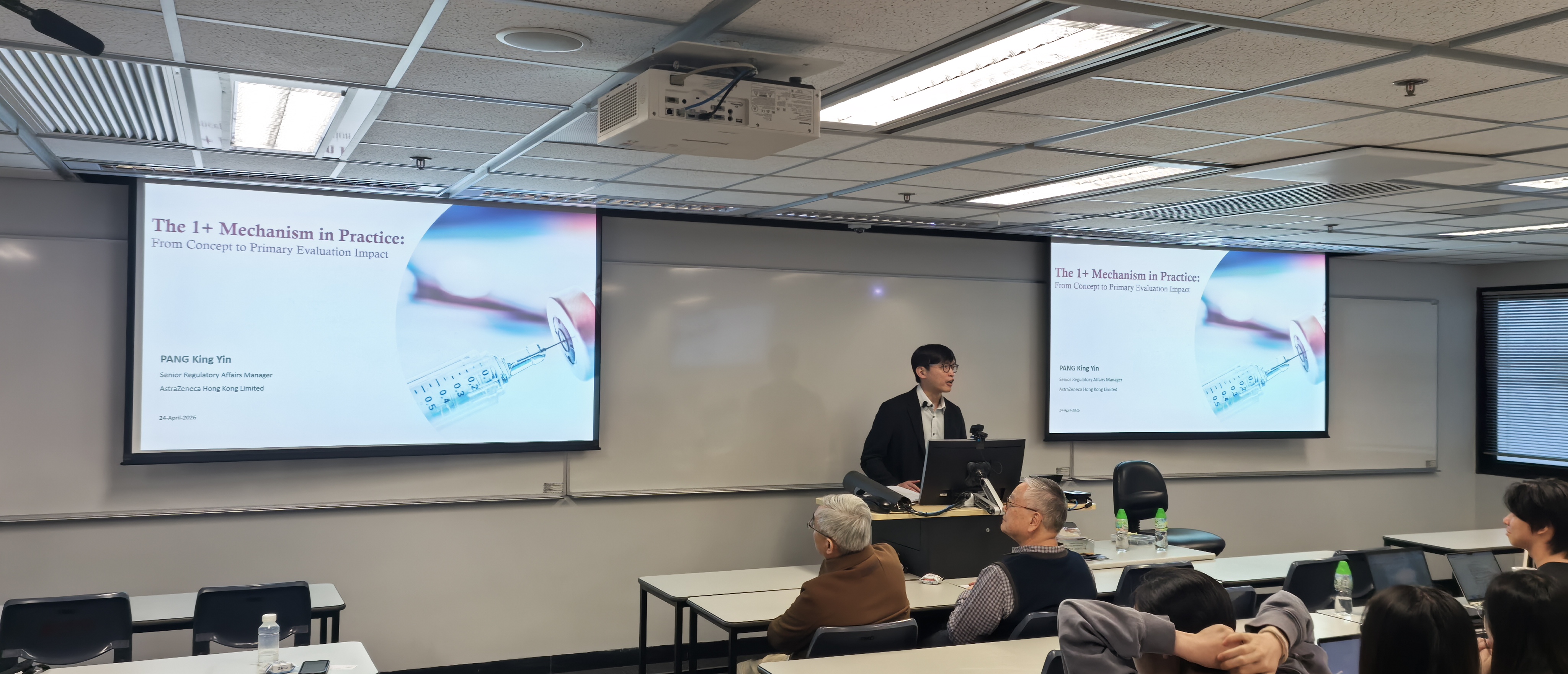
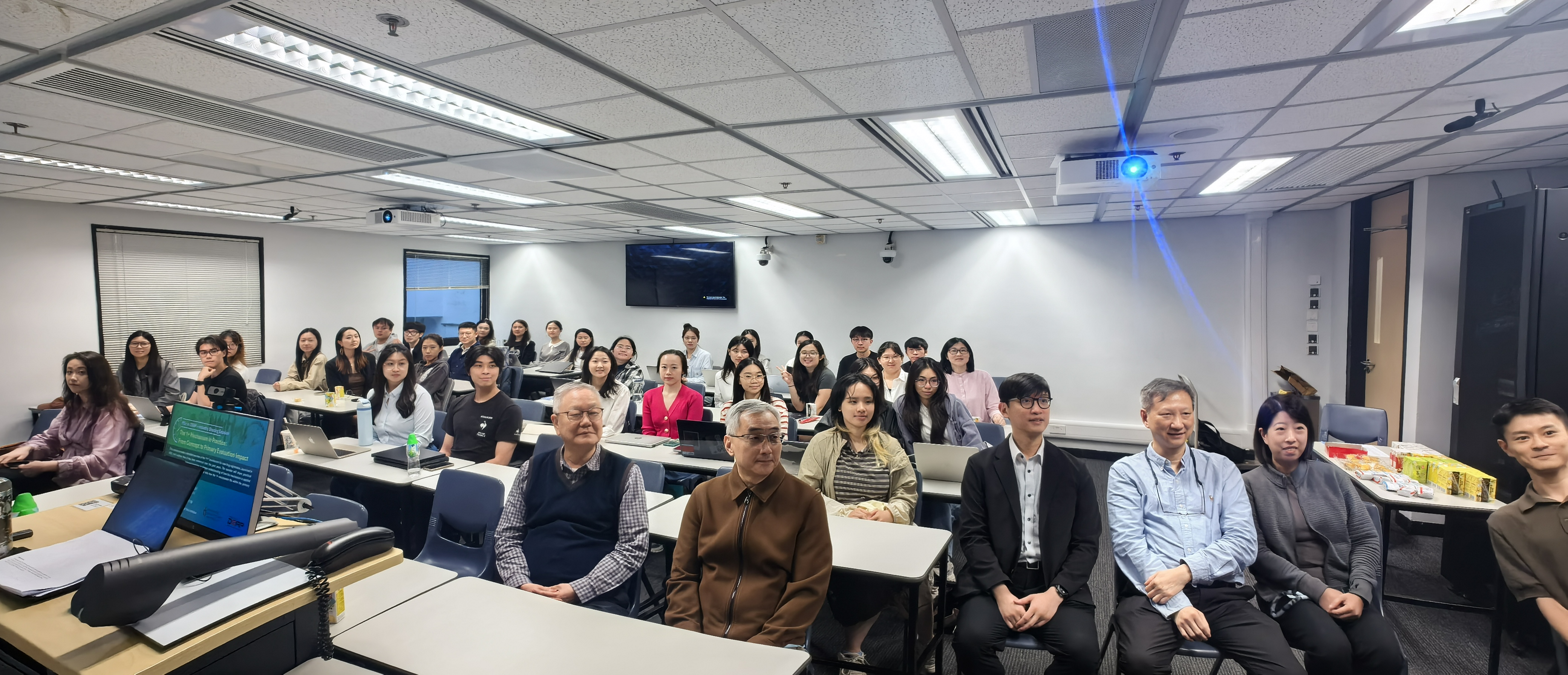
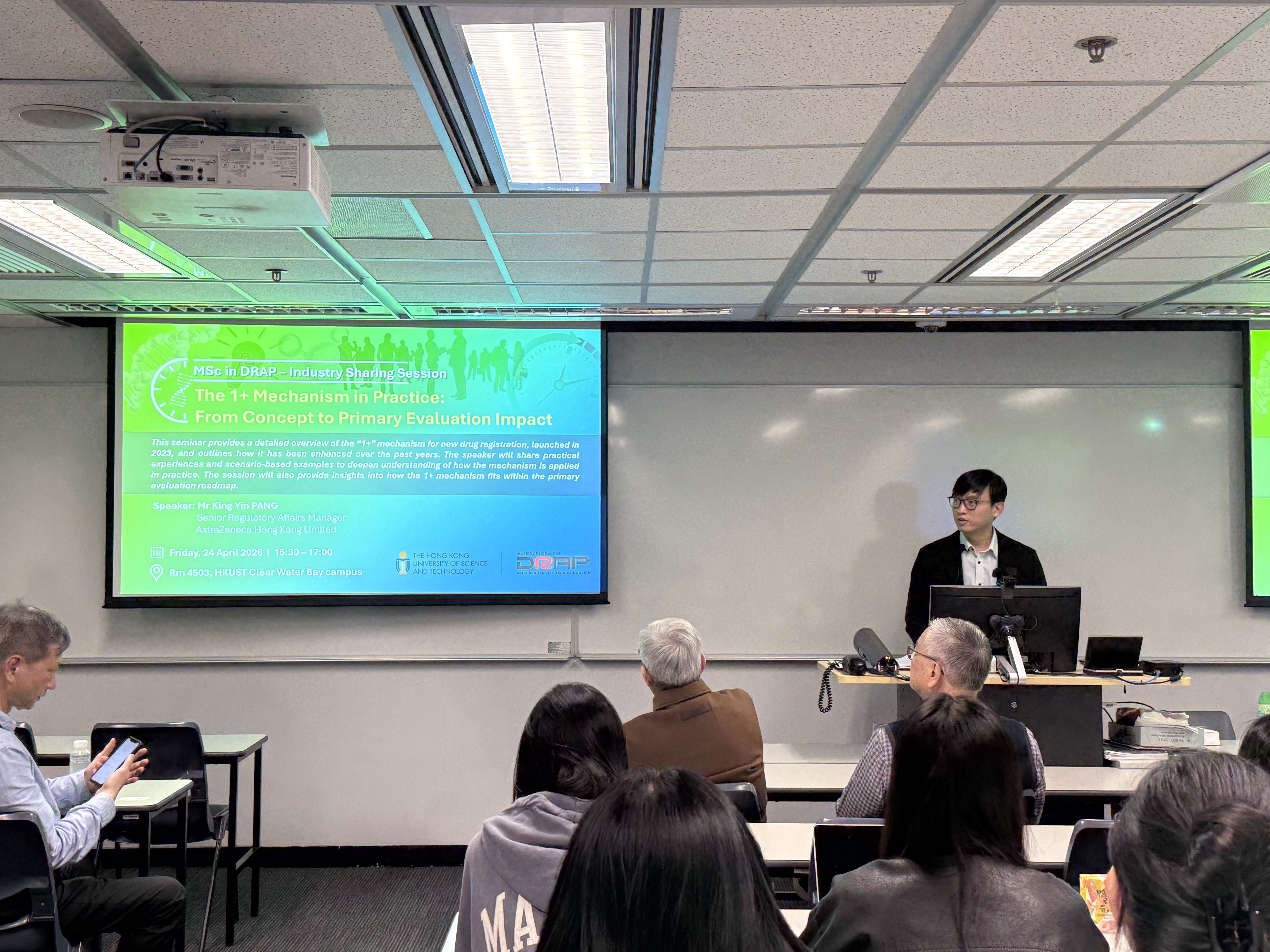
HONG KONG, April 24, 2026 – The MSc in Drug Regulatory Affairs and Policy (DRAP) program at HKUST hosted an industry sharing session today featuring Mr. King Yin Pang, Senior Regulatory Affairs Manager at AstraZeneca Hong Kong Limited. The seminar, titled “The 1+ Mechanism in Practice: From Concept to Primary Evaluation Impact,” drew a keen audience of students interested in Hong Kong’s evolving new drug approval pathway.
Understanding the “1+” Mechanism
Launched in 2023, the “1+” mechanism is a regulatory fast-track pathway designed to accelerate patient access to innovative new drugs in Hong Kong. Under this framework, a drug can be considered for registration based on one local clinical trial plus one set of overseas reference regulatory approvals (e.g., from the Chinese National Medical Products Administration, the US FDA, or the European Medicines Agency), rather than requiring two local trials.
During the seminar, Mr. Pang walked participants through how the mechanism has been enhanced over the past three years, moving from a conceptual framework to a tangible tool that pharmaceutical companies can use to shorten the time between global approval and local patient access.
From Theory to Practice: Real World Scenarios
One of the most valuable parts of the session was the use of scenario based examples. Mr. Pang shared practical experiences from AstraZeneca’s own portfolio, illustrating:
• How to determine whether a new drug candidate qualifies for the “1+” pathway.
• The types of primary evaluation evidence that regulators expect.
• Common challenges companies face when submitting a “1+” application, such as aligning local clinical data with overseas reference approvals.
He emphasized that the mechanism is not merely a regulatory shortcut, but a rigorous but streamlined evaluation that still prioritises patient safety and drug efficacy. The “primary evaluation roadmap” – a step by step review process – was explained in detail, helping the audience understand where the “1+” mechanism fits within the overall regulatory workflow.

Implications for Future Drug Registration
Mr. Pang also discussed how the “1+” mechanism aligns with broader trends in global regulatory science, including reliance-based approval pathways and pharmaceutical convergence. For students of the MSc DRAP program, the session provided a rare, industry level look at how multinational companies like AstraZeneca are operationalising Hong Kong’s regulatory innovations.
“The 1+ mechanism is a game changer for patients waiting for novel therapies. But successful application requires deep understanding of both local requirements and global regulatory standards,” Mr. Pang remarked during the Q&A session.
Conclusion
The seminar was a timely and practical addition to the MSc DRAP curriculum, bridging classroom theory with real world regulatory strategy. AstraZeneca’s active role in sharing these experiences underscores the importance of public private dialogue in shaping Hong Kong’s future drug regulatory landscape.